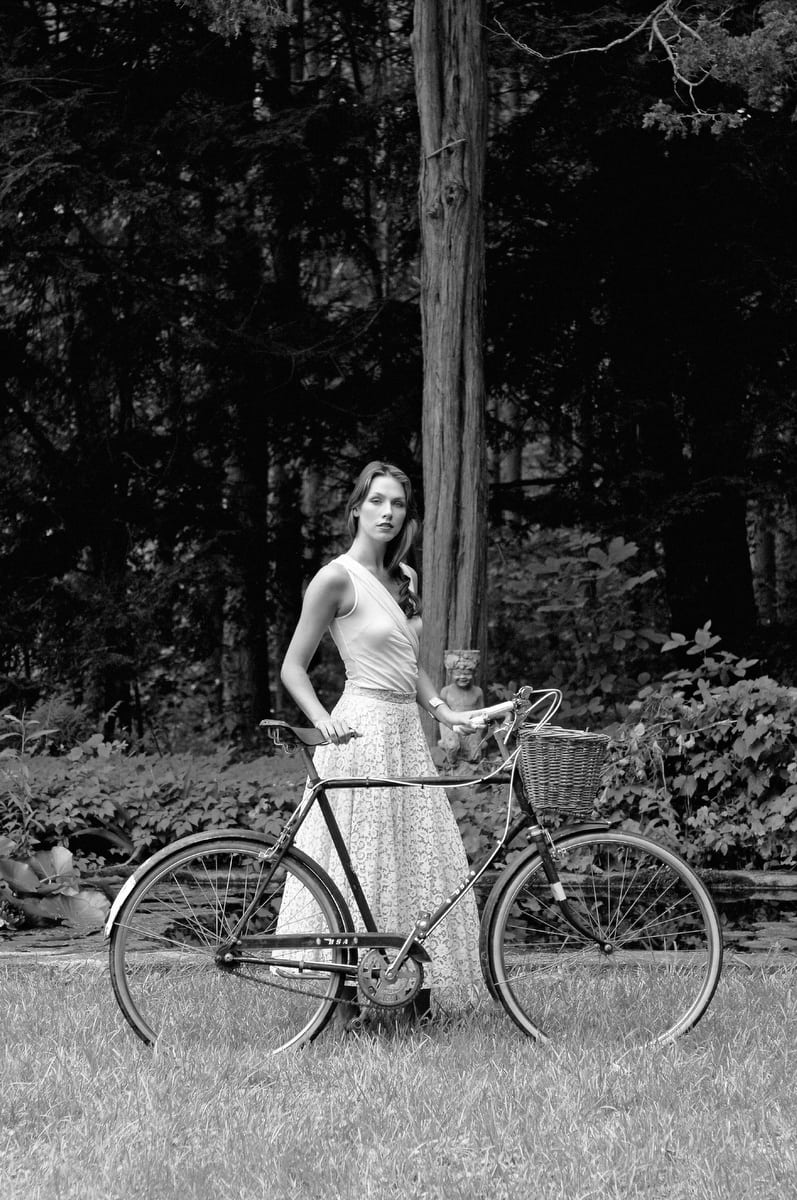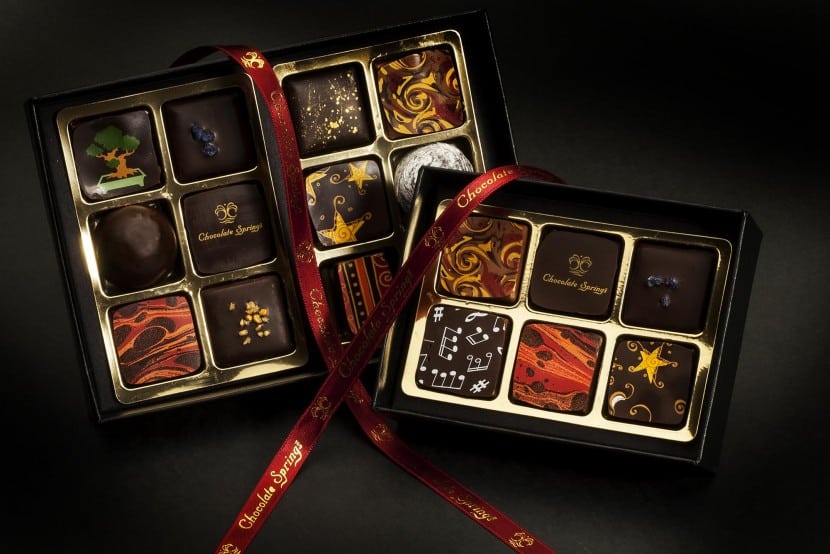
Shoot at the Studio
Here’s a little compilation video of a recent shoot for knitting-phenom Catherine Lowe at the Studio:
Gilded Age Road Trip | New York – DailyCandy
![]()
With a getaway car (preferably something classic that requires driving gloves), you can make out like a robber baron in the colorful hillocks two hours north of the city.
Eats, Loafs, Leaves
Built in 1912 by fancy-pants architect Addison Mizner, Rock Hall offers all the pomp and circumstance of the excessively wealthy without the excessive price. Think fireside cocktail service, an authentic 1926 Brunswick arcade pool table, handmade Syrian backgammon sets, and a cozy screening room stocked with popcorn and film noir.Outdoor enthusiasts will delight in the synthetic grass tennis court and ball machine, on-site apple picking, and romantic bike rides. But the leaves, you say, the leaves! Book a horse-drawn carriage ride (with bubbly, bien sûr!) and stop in for French fare at Pastorale in nearby Lakeville, Connecticut.
Ventfort Hall Mansion was one of 75 country estates constructed in the resort town of Lenox, Massachusetts, during the late 19th century. It now houses the popular Gilded Age Museum, which offers a year-round selection of quaint exhibits and events (200 Years of Berkshire Brides, Victorian tea), along with picnics on the expansive porch overlooking the great lawn.
Elite Athletics
Golf was a favorite sport during the Gilded Age, and the 380-acre opulence of Cranwell is a historical place to tee off. The eighteen-hole championship golf course has incomparable views of the foliage and a perky staff of PGA pros on hand for lessons.Follow up a round with a bucolic thirty-minute drive to Mepal Manor and Spa, which has a full salon with hair, nail, waxing, and massage services and results-orientated treatments like the Monticelli mud wrap. Contemplate the changing leaves (and your improving epidermis) in the outdoor hot tub.
Vanderbilt-Worthy Victuals
A gilded gal has to eat, and Blantyre is the place to make up for all those nights of Ramen. Dinner guests are greeted by staff in lace pinafores in front of a stoked fire, stocked bar, and fancy finger food, before being escorted into a gastronomic wonderland reimagined seasonally by celebrated chef Christopher Brooks.Because sometimes life tastes better on a silver spoon — even if it’s a demitasse and not a ladle.
Keep on truckin’. For more road trip ideas, go to dailycandy.com/guides.
Daily Candy NY has a nice entry today about a Gilded Age road trip, including stops at Ventfort Hall in Lenox (www.gildedage.org), Cranwell, and Blantyre (www.blantyre.com). Nice! Uncredited, but 3 out of 5 photos on the article are by Kevin Sprague. Branding the Berkshires? Underway, thanks….
Photo shoot at the Papermill playhouse Nj
Shooting people and place at the Papermill playhouse in NJ thanks to Mark Jones.
Sent from my iPhone
Theater Review – ‘Twelfth Night’ – Shakespeare and Company Turns Elizabethan Self-Discovery Into Child’s Play
Elizabeth Raetz as Olivia, and Ryan Winkles as Sir Andrew Aguecheek in “Twelfth Night.”
Fine fools: Ryan Winkles, left, as Sir Andrew Aguecheek, and Nigel Gore as Sir Toby Belch.
Great review of Twefth Night in the New York Times with some nice photos running. I haven’t seen the print version of this but I hear it looks good. Elizabeth Aspenlieder knocked it out of the ballpark this August with big, colorful stories in NYT and Wall Street Journal and Boston Globe, in some cases multiple times. I always tell people that marketing lets the audience know that they can buy tickets, but PR actually sells out houses. This production is also testament to having faith in your home-grown talent, as Jonathan Croy certainly is, having mounted more productions of Shakespeare through the Fall Festival than any other person alive except Kevin Coleman. Govane Lohbauer’s fabulous costumes, done on a shoestring, should shame any better budgeted production into obscurity. These talented folks live here, work here, and teach here. We should honor them.
Downtown wireless – Berkshire Eagle Online
This is great news and good to see the Chamber thinking so forward. With all the discussion in communities around the country about free wifi, it’s great to see action in place of words. I can’t wait to get my email walking down North Street without a thought. Free wifi is a community designator – a valuable resource that will accelerate and define the progress that the city is making by focusing on it’s own resources of creativity, talent, entrepreneurship and initiative. Good Job!
Sienna Gallery – Innovative Modern Art and Craft
Sienna is a long-time client and friend of mine and Studio Two (www.studiotwo.com) and as a fellow small business entrepreneur, we talk a lot about the state of the universe that we work in. I’m hoping that we’ll be seeing big changes in Sienna’s web presence in the weeks and months ahead as we migrate aspects of her site from the elegant custom CMS that we built for her some time ago into the open framework of Wordpress. I’m encouraging her to build her strategy going forward around posterous as well (www.posterous.com) as I think that it is a terrific tool for integrating the communications that a business, institution or individual needs to make across the many different social networks, sharing sites and rich media sites. I’ve been using it for a couple of weeks and it is changing my habits around posting and communicating in big way.
One of the interesting aspects about the revolution taking place on the web today, the transition from technology to language, is that it rewards experimentation and participation like nothing else. You have to “play” within this space to learn it. Businesses like mine, that were formerly the gate-keepers to the web, have to learn to not only throw open the gates by building frameworks and foundations where our clients can play, but much like bringing up children, we have to encourage them to go outside and make their own mistakes.
The internet is a language now. Not a technology. Fluency comes with practice, experimentation, and making mistakes and learning by listening. We’re learning new words every day. Good Luck Sienna!
‘Creative Districts’ Suggested to Support Cultural Endeavors – / iBerkshires.com
I had the opportunity to sit at the roundtable at MassMOCA yesterday with many other people involved in the Creative Economy and have a discussion with Gov. Deval Patrick, Jason Schupbach, Director of the Creative Economy Sector, and other representatives from the state and local government. The Gov. runs a good meeting, and the comments were substantive and useful. It’s all about the money, in the end: how do resources get allocated and where does investing public funds bring you the greatest return.
I had the opportunity to speak to Gov. Patrick after the meeting briefly about my views, that the non-profit cultural sector fundamentally IS the economy of the Berkshires, and that a job at Barrington Stage or Shakespeare & Company is just as good a job, and worth preserving and tending, as a job at a for-profit. As he said himself, “I’m increasingly struck by the opportunity presented by a strong cultural element,” said governor. “How do we build on that even at a time of scarce resources?”
It’s heartening to see the development that has taken place in the past few years since Berkshire Creative (www.berkshirecreative.org) was formed and came on the scene a new voice in the Economic Development world of the Berkshires. It’s exciting to see the changes, but there is still so much to do. I hope that the delegation took away some incentive to reinvest in the MCC, the Cultural Facilities Funds, The Film Commission and other agencies that have seen their budgets cut in the past year. Thanks for coming out to see us, Gov. Patrick.
Consulting
So I’m working on a new gig as a consultant that is an interesting departure from the role that I have played typically over the last 15 years in business. Historically, we (Studio Two) have acted as the “marketing department” for many of our clients who are too small to really have one, or likely only have a single person in the role of marketing director. That leads to planning, strategic analysis, media planning and so forth. This is the first time I’m really coming into a situation not to “do” the work so much as help facilitate what work gets planned and done.
I’m going to keep the client anonymous for now in these posts, but it’s a significant regional institution. The job I’ve been hired to do is to transform their culture, as relates to all things internet. It’s been a fascinating ride for the past few weeks.
Fundamentally, what led to this was a series of conversations with the leadership of the institution, who had become increasingly frustrated by the inability of the internal culture to transform from past practice into the evolving future. Back when the web was new, we all ran out and built web sites. We got email. We learned how to create links. Fast forward to today with the rapidly evolving web 2.0 and 3.0 worlds of blogging, social networks, mobile devices, email marketing, and open-source software, and you have a radically different landscape. Well, the news is that for many institutions, conservative by nature and slow to change, this rate of progress presents a somewhat daunting challenge. But change they must to survive.
The context of my strategy on achieving success in transforming the institution into a web 2.0 culture is as follows:
• The internet is a language, not a technology. We have to pursue a degree of fluency across every department and individual.
• If it is hard or technical to do, don’t do it. Find a easier way.
• If there is something you want to do, don’t code it yourself. Go look for a solution pre-built, it’s out there.
• Use the simplest, most common and most popular tools available. Be prepared to try them out and if they don’t work, find another tool
• Plan for change. Everyday.
Steps we are taking are building their web presences on wordpress, for launch in a matter of week. We’re enlisting every employee and department as potential editors and contributors, and we’re setting up multiple points of entry for people to participate. We’re moving off proprietary systems for email communications, networking and ecommerce to robust commercial and open-source systems that are pre-built. And we’re working towards changing the relationship between inspiration, action and event: namely taking down barriers between thought and publishing.
Stay tuned. More to come.
Reaching the Aha! Moment
So I think that I’ve broken over to the other side. Since the HOW conference back in May, I’ve been focused on transitioning my thinking over to web 2.0. What does that mean? Well, in baby step terms, it means rethinking my relationship to the design, building and managing of websites, and rethinking the function of those sites and the way they communicate. That may not be very 2.0 from the West coast perspective, but it is plenty so from where I sit.
I’ve been full tilt into wordpress for this period. I settled on it as it seemed the most flexible yet WYSIWIG of all the blog and CMS tools I looked at. I’m no programmer, but I’ve been creeping my way in to .CSS and flexing my meager HTML skills.
At the HOW conference, Amy Goto spoke about the “Aha!” moment that she thought everyone needed to have to make that transition into the new web space, that moment when your skills and comprehension come together with your vision and it all starts to work. My “Aha!” moments have been fast and furious the last two weeks. I’ve set up 4 or 5 blogs (check out the new Arcadian site) and really set them up, applied some styles, activated fun plugins, worked around sticky problems. I’ve initiated my second wiki on a project with success and that is really starting to tick. I got all my laptops and miscellaneous machines talking to each other and now I can post and FTP at will from anywhere.
So what? I’m not sure yet. But if feels liberating. It feels like there might be a new pathway opening up here. I’m not sure what it is yet, but I like it. Creativity for me is about creating the shortest possible path between idea and expression. The web used to be a dead-end for me as a creative space because of the gap between those two actions. Now the gap is closing. I’ve always told people that to me using Photoshop is my paintbrush, my creative tool of choice. For most people it’s an esoteric, slightly foreign language, but for me it’s like being a concert pianist and playing the piano: it’s just what I do best. I’m not fluent in this space yet, more like I’m playing “Für Elise” in my ninth grade recital than it is like playing improvisational jazz. But hey, you have to start into the good stuff sooner or later or choose another instrument. Thanks Amy, I’m fully in the “Aha!”
This image is here because it has a piano in it. Oh, and the lovely Natalie. It reinforces my point somehow…

Overseas Perspective – Designit
Designit is a “Strategic Design Consultancy” home-based in Denkmark with office around Europe. I tripped across their site some years ago and I always find myself going back to it when I am looking for a different perspective on the design business, and the business of being creative. They have a broad view, working across normal boundaries into interactive, industrial design, graphic and strategic space all at once for their clients.
One of the features that distiguishes the best European design from the rest of the world is the clean, elegant and subtle approach. Everything is pared down to the minimum, or down to the core. You can take this too far, of course, and you end up with uncomfortable chairs…
But the main reason I come back to their site is that I have a dream where I go to Denmark for some sort of job/sabbatical at Designit and get to work with fun designers on projects wholly unlike my own and I get to learn some Danish and stay up really late under the midnight sun during the summer. That’s really why.
They’ve launched a blog on their site, which is an interesting alternate perspective on their normally completely controlled environment. I found this link about candied apples very illuminating. The writer says: “Look at this picture – proof that the US is the mother of innovation culture. In Denmark we also have a tradition for caramel apples. Tradition with a big T, that is. It’s never changed and it is still only possible to get the red classic version “.
It’s kind of refreshing, as an American in these times, to see that we (as a culture) can still export some values, that some aspects of the dynamic, creative, American dream live on.
Farvel sålænge!
Lulu.com changes everything.

We’ve been producing a number of print jobs via lulu.com, the online, on-demand publisher. It’s been a fascinating process, in part because it totally transforms your thinking about what it means to print and publish things. Traditional thinking about publishing is driven by quantity: I need to print so many thousands of something to justify the production cost. So you end up generating 2,000 copies of your book, or magazine, or brochure and 1,500 of them sit mouldering in your basement till they end up in the dumpster. You really only needed 500. But traditional print production doesn’t reward printing 500 – for just a tiny amount more money, you can have 2,000.
With lulu, you lay out your publication, upload the PDF and cover art, and 4 days later in the mail you get a perfect book. Just one, if you want. Our experience with them has spanned the 282 page “Imagining Shakespeare” in fabulous 4-color throughout, to the more mundane 36 page, text only, black and white handbooks for a local school. In both cases, we only needed small quantities, and producing them via traditional means was impossible. The 282 page book costs about $50 per copy, but you can buy one, and they send it to you in 4 days.
What has really been interesting about this is how difficult it is for people to understand the idea that they ONLY NEED TO PRINT WHAT THEY REALLY NEED. It’s counterintuitive. Sometimes you really only need 10 of something, and with this service, you can actually do that. We’re laying out a magazine right now for a client, I expect it will be around 60 pages or so, full color, for a super high-end hotel. They currently send out a fancy brochure and folder to inquiries overflowing with miscellaneous print pieces, reviews, reprints, etc. We can bring all those elements together and print 1 **ONE**!! at a time for a cost that will be less than the folder they currently send out.
I’m still wrapping my brain around what it means for print communication when you can do this kind of thing. A friend of mine who is an artist would like to sell posters of his work, but is daunted by the upfront cost of having to print at least 1,000 to justify the cost. With Lulu, he can upload his work, establish and online store and be selling the prints and making a decent markup on them in less than 30 minutes. No inventory, no capital, no cost.
Do you have an idea that you want to publish with Lulu? Do it. Let me know what you think. If you have any questions about this new paradigm, drop a comment. It’s cool.
Next Book!: Imagining Shakespeare.

I’ve self-published a new book that shows a comprehensive look at all of the work that I have done for Shakespeare & Company for the last 15 years. I had a lot of fun digging through my archives to find all this great stuff. It is 280 pages, 8.5×11 softcover and hardcover, full color throughout. Buy now via lulu.com: Kevin’s Storefront on Lulu.com
Presently I’m working on how to do a 2,000 copy run, which I think is about the right number to satisfy demand for a while and also brigs the per-copy price down. Hoping to crowd-source this initiative through Kickstarter so if you can send me an invite that would be great. If you have any other ideas about how to get this out into the world, I’m interested in that as well, so email me!